What Are The Properties Of Spunlace Fabric?
Spunlace fabric, a type of nonwoven material, has gained significant popularity across various industries due to its unique properties and versatile applications. This article delves into the properties of spunlace fabric, offering a comprehensive overview of its key characteristics, which include softness, strength, absorbency, breathability, and versatility.
1. Softness:
One of the most notable properties of spunlace fabric is its exceptional softness. This soft, cloth-like texture makes spunlace fabric highly comfortable to the touch, and it is often compared to traditional woven textiles in terms of its tactile qualities. The softness of spunlace fabric is a result of its unique manufacturing process, where staple fibers are entangled using high-pressure water jets. This entanglement creates a gentle and smooth surface that is ideal for applications requiring comfort and skin contact.
2. Strength:
While spunlace fabric is renowned for its softness, it also possesses a considerable degree of strength and durability. The entangled fibers within the fabric provide structural integrity, making it resistant to tearing and abrasion. Spunlace fabrics are commonly used in applications where both comfort and strength are necessary, such as medical textiles (like surgical gowns and drapes), personal protective equipment (PPE), and even automotive interiors.
3. Absorbency:
Spunlace fabrics exhibit excellent absorbency, which is a property highly valued in various industries. This property is particularly advantageous when spunlace fabrics are made from natural fibers like cotton or rayon. The entangled fibers create a network of small capillaries within the fabric, allowing it to absorb and retain liquids efficiently. Consequently, spunlace fabrics are frequently employed in products like wipes, medical dressings, and hygiene products, where rapid and effective liquid absorption is essential.
4. Breathability:
Breathability is another notable property of spunlace fabric. Due to its entangled fiber structure, spunlace fabric allows for the easy passage of air, making it a breathable material. This property is advantageous in applications where comfort and moisture management are essential. Spunlace fabrics are often used in clothing, including sportswear, activewear, and innerwear, where breathability helps regulate body temperature and reduce sweat accumulation.
5. Versatility:
One of the most compelling characteristics of spunlace fabric is its versatility. Manufacturers can engineer spunlace fabrics to meet specific requirements by adjusting various parameters during the production process. This versatility extends to the choice of raw materials (natural fibers, synthetic fibers, or blends), fiber thickness, and entanglement density, allowing for the creation of tailored fabrics suitable for a wide range of applications.
Spunlace fabrics find applications across numerous industries, including:
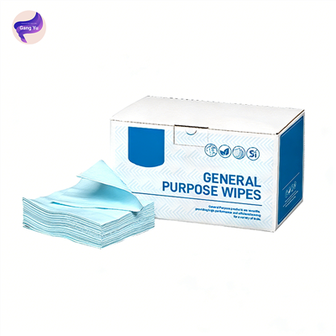
Personal Care and Hygiene: Spunlace is widely used in the production of disposable wipes, baby wipes, facial masks, feminine hygiene products, and adult incontinence products due to its softness, strength, and absorbency.
Medical and Healthcare: Spunlace fabrics are used in medical dressings, surgical gowns, drapes, wound care products, and disposable medical supplies due to their combination of softness and barrier properties.
Apparel and Fashion: Spunlace fabrics are utilized in the fashion industry for clothing items like sportswear, innerwear, and intimate apparel, where comfort and breathability are crucial.
Automotive: Spunlace fabrics find applications in automotive interiors, including seat covers, headliners, and door panels, where they offer a balance of comfort and durability.
Industrial and Cleaning: Spunlace fabrics are used for industrial cleaning wipes, filtration materials, and various technical textiles due to their absorbency and strength.
6. Environmental Considerations:
Spunlace fabrics can also be environmentally friendly depending on the choice of raw materials and manufacturing processes. For example, using sustainably sourced natural fibers or recycled materials in spunlace production can contribute to a more eco-friendly product. Additionally, the biodegradability of certain spunlace fabrics can make them a sustainable choice for single-use applications, reducing environmental impact.
In conclusion, spunlace fabric exhibits a range of desirable properties that make it a versatile material suitable for numerous applications. Its softness, strength, absorbency, breathability, and adaptability make it an ideal choice in industries where these characteristics are valued. As technology and sustainability considerations continue to evolve, spunlace fabrics are likely to find even more diverse applications and play a significant role in shaping the future of nonwoven textiles.